
“It’s better to be a good street cleaner than a bad musician.”
– Music Teacher
THE BEGINNING
That’s was my first feedback from a first professional musician I’ve ever met. I was 16 years old and started to play bass, at that time in Latvia it was very hard to find any music teacher or even books or video tutorials. My only option was to go to music school. And after 2 minutes of audition the examiner suggested me to become a street cleaner, because I will never be a musician.
Later I kind of understand him, first of all I was too old, most of the kids starting music school at the age of 6 or 7. Secondly my hearing was terrible, i couldn’t hear a difference between any 2 notes. It was a mystery too me, and everything sounded the same. And finally at that time I could barely even play a few notes on my bass.
Yet, I never listened to him. Instead his “quote” sparked a flame inside me. I was angry. Now I wanted to prove to him, that he is wrong. I will become professional musician!
I started to practice like there was no tomorrow. For the next 2 years I was practicing in average 8-10 hours almost every day. Most of the mornings I was going out of home together with my parents they were going to work and I supposed to go to school. But I just walked around the small forest nearby and 5 minutes after was back to home to practice. Honestly I don’t even know how I finished my school, as for the last year there I was absent almost all the time.


I began playing in bands and eventually found myself playing in five different bands simultaneously. On the rare occasions I attended school, I was often hungry because I saved my lunch money to pay for rehearsal fees. I immersed myself in learning, rehearsing, playing shows and taking lessons from several private teachers. I frequently switched bands as I evolved as a musician, while the bands remained stagnant, causing my interest to wane quickly. I would then join more professional or experienced ones. Fortunately, in Latvia, there was a constant demand for bass players, which made it easy to transition.
After finishing school, my parents insisted I attend university for higher education. There were no discussions about that. It was an ultimatum. The only course available at the time that related to music was a degree in “Art Management.” They had a music practice room with excellent equipment, so I thought I could at least skip classes to practice there. I enrolled but was deeply disappointed and shocked by the program. I expected to learn about art, music, and various creative subjects. Instead, the entire four years focused on how to sell art, not how to make it.
I was so sad that after just two weeks, I withdrew from the university. It was devastating for my parents, and my mother didn’t speak to me for a month. Our relationship was already very tense due to my obsession for bass guitar, and this was the final straw. They worried I couldn’t make a living by music. To ease the situation, I promised them that the following year I would enroll at a music university in Great Britain. However, I needed to save money, so I started working in construction with my father.
LONDON
In 2007 I made it to London. But I couldn’t pass enrollment exam, playing technique & theory was good enough, but not the hearing. I still couldn’t hear the difference between the notes. So i bought some books and audio lessons and practiced for another few months, and failed again. It took me 3 attempts to pass hearing exam. I was so bad at it. But finally I was accepted in London Thames Valley University – Popular Music Performance degree. I took a loan to pay for the studies I thought that finally my dream came true.
At the beginning to have some money to buy food and pay for accommodation I worked as kitchen porter in British restaurant. Since I wasn’t motivated cleaning plates all day, I got fired very quickly. Which made me homeless in one day, because the room I was living in was provided by that restaurant. So for few weeks I was staying at some random peoples house, some I knew, others were friends of my friends of my friends. There was a pressure since everyone was telling me that I have to search for a job urgently. But I never ever wanted to go back to work. So I started to play on a London streets. And to my surprise it worked. I was earning the same amount of money in 3 days that I would do cleaning dirty plates in a restaurant for 1 week.
Nice coincidence was that while busking on a streets I’ve met 2 polish musicians – an acoustic guitar & banjo player, we started to jam together and it just clicked perfectly. After just 2 days of knowing them I told that I have no where to sleep tonight. And they offered to stay at their place. They also took me in their cover band, and I start living at their room (3 persons in one room) and perform with them at funerals, birthdays, weddings, elderly houses shows.
After a while I got a license to play at the London Underground. Yes, imagine, at that time you have to pass the audition to be able to get license to play there. It was nice, there was a booking system you could book a 2 hour spot at specific station 3 weeks in advance it was like proper job to me. But the one that I like. I could practice all day and got paid for that. Perfect!
UNIVERSITY
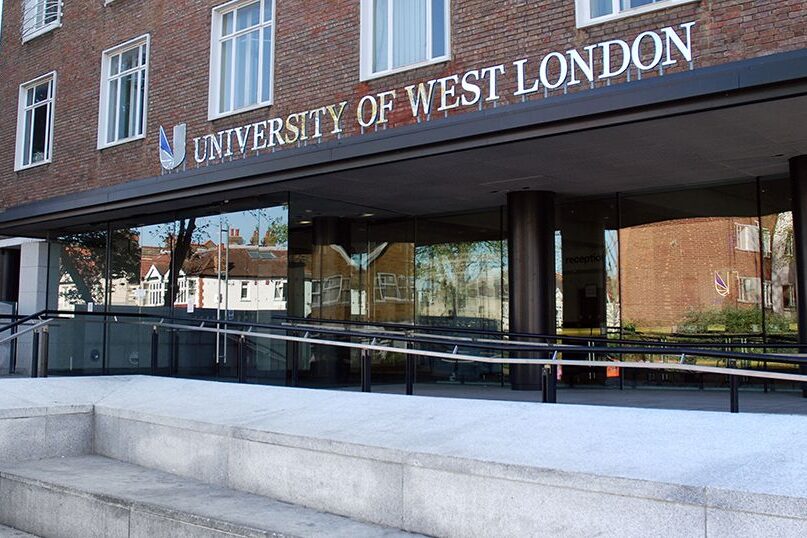

I began my university studies with high hopes, but it turned out to be the opposite of what I had imagined. Instead of helping to improve my creativity and uniqueness, and making outstanding artist out of me (that’s exactly what they were promised in their adverts) they were converting me in a copying machine. The aim was to mold us into professional session musicians, prepared to step in at any moment—like if Justin Bieber’s bass player fell ill before a show, we could instantly replace him. This required knowing the specific bass, amps, and pedals he used, understanding his playing style, reading sheet music, and ideally being familiar with some of his songs. Even copying moves of the bass player and stage costume was part of the curriculum.
Every week, we faced a small exam where we had to perform a song by a specific artist. Those who matched the gear of Jamiroquai’s bassist or dressed like Prince’s bassist scored higher. It became absurd when a guitar student had to replicate a mistake from a live Jimmy Hendrix performance because Hendrix had also made it. I had no desire to be anyone’s clone, and my improvisation and personal touch were consistently met with poor grades.
And I wasn’t lonely weirdo in this uni, there was this beautiful girl, who was exactly like me. That’s how I met Mara, the love of my life and future wife. We were rebels, breaking the rules together. We aspired to be artists and creators, not copies of someone else. So, we left the university together, not even finishing our first year.
KARMAFREE
During my studies and for a few years afterward, my sole income came from busking in the London Underground. I frequently attended auditions and played in various bands across the city. Despite being told, “You were the best bass player, but we chose another one,” I faced rejection from high-profile and major label bands. Gradually, I came to understand the reality of being an immigrant. My lack of success was partly due to not being British and coming from an Eastern European country, which was a lower status human in the UK at that time.
I was depressed because I knew I could learn and become the best bass player in the world, but I never will be able to change my nationality. I also stopped playing on streets, because I was tired. I was tired of not having any musical opportunities, and occasional humiliations by being on streets. Like when some one insults you, or throwing 1 penny coins in your face.
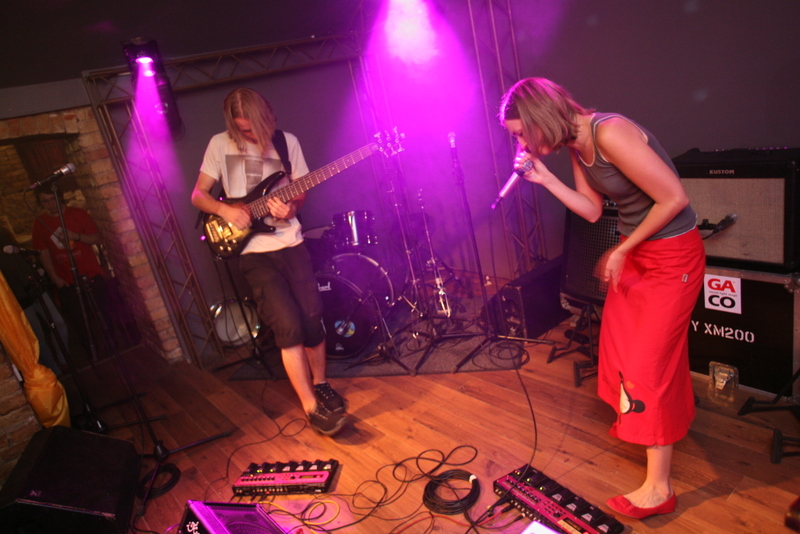
Ultimately, Mara and I decided to make a project together, just the two of us. A project where we could be creative and do just what ever we wanted to do. Armed with loop stations and various effects, Mara also learned to beat-box, and that marked the beginning of Karmafree. Our commitment to this project was so intense that we quickly depleted all our money. We spent our days practicing, booking shows, recording music, and filming videos. Eventually, we found ourselves living in abandoned houses, or “squats,” in London, we became homeless.
Since we met, we always were poor, we just had enough money to survive. Living in squats, we relied on expired food from supermarket dumpsters. I was terrified by the massive volume of food waste worldwide. After years of striving for recognition and some musical career, we finally gave up and decided to leave UK and return to Latvia.
ACOUSTIC BASS
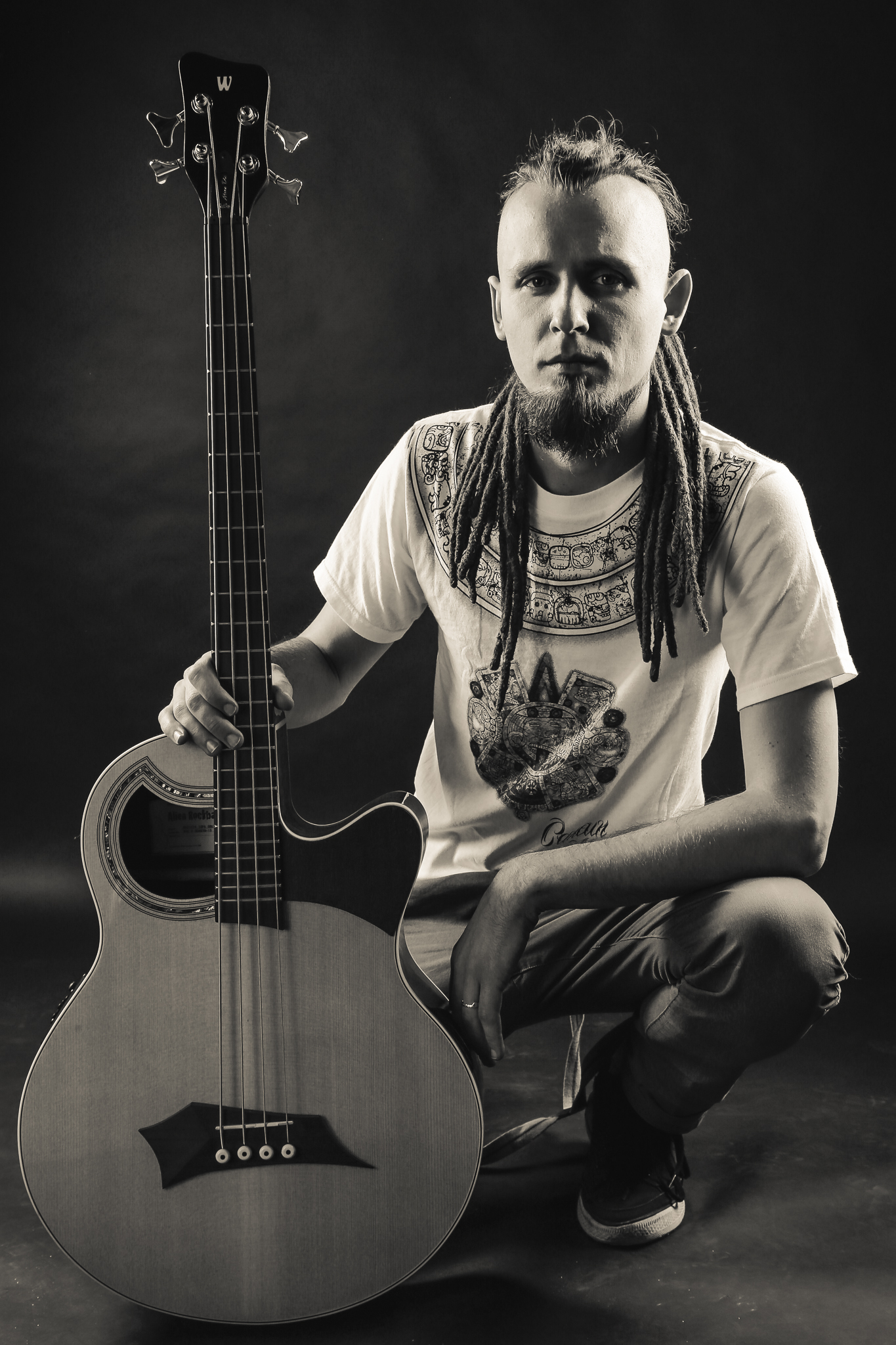
In Latvia, we launched our teaching studio and began offering private bass and vocal lessons. We explored various sounds, effects, formats, genres, and styles, and over the years, welcomed several other band members. Our musical journey took us through rock, metal, hippie style, pop, and everything in between. Those were exciting times as we experimented and crafted something truly unique and artistic. We performed at numerous shows and festivals across different countries; however, the project ultimately failed. Not many people were “digging” our music. And after 7 years, we decided to end it.
In one of my final attempts to find success with Karmafree, I decided to go fully acoustic, focusing solely on basic sounds, bass, and vocals. I picked up an acoustic bass and considered combining playing with rhythm, inspired by acoustic guitarists like Jon Gomm and Andy Mckee. The percussive finger-style on acoustic guitar fascinated me, and I wondered if anyone was doing the same on bass. To my surprise, I couldn’t find anyone on YouTube. That’s when I realized I had to be the first one.
I resumed practicing like mad again, dedicating 8 hours a day, and soon created my first solo composition, “Prometheus.” I composed it for the Russian Bass Player Competition, and to my surprise, I won first place. Encouraged by this success, I decided to produce a professional video for the piece.
BREAKTHROUGH
We went to the roof of office building in Riga and made quick video. Few weeks later it was published by “Bass The World” channel on youtube and instantly went viral. I never ever had so much attention and recognition. So I made another video and another and another.
Offers from various brands began to appear, promoting strings, basses, amps, and even clothing. President of Warwick seen this video and offered me very generous endorsement deal. They just flooded me with their gear. I did some reviews of pedals and basses, but very quickly started to reject offers, as again I never wanted to be a trader, I wanted to be a musician, a creator. In fact this realization made me very depressed.
But what was more important I got invited me to the Warwick Bass Camps in Germany few times. And that’s was the golden ticket to the “elite bass player club”. Nearly all of my bass heroes were there. Not only did I have the opportunity to perform in front of them, but they were also incredibly supportive and curious about my unique style, which was truly overwhelming. I also made many friends.
I eventually released my solo album, launched a video school, and performed at numerous bass and music gear exhibitions, including the London Bass Show. I also began working professionally as a session recording musician. After 14 years of playing finally I’ve made it. I’ve became a professional musician, and brought new genre and style in the world of bass.
BACK TO METAL
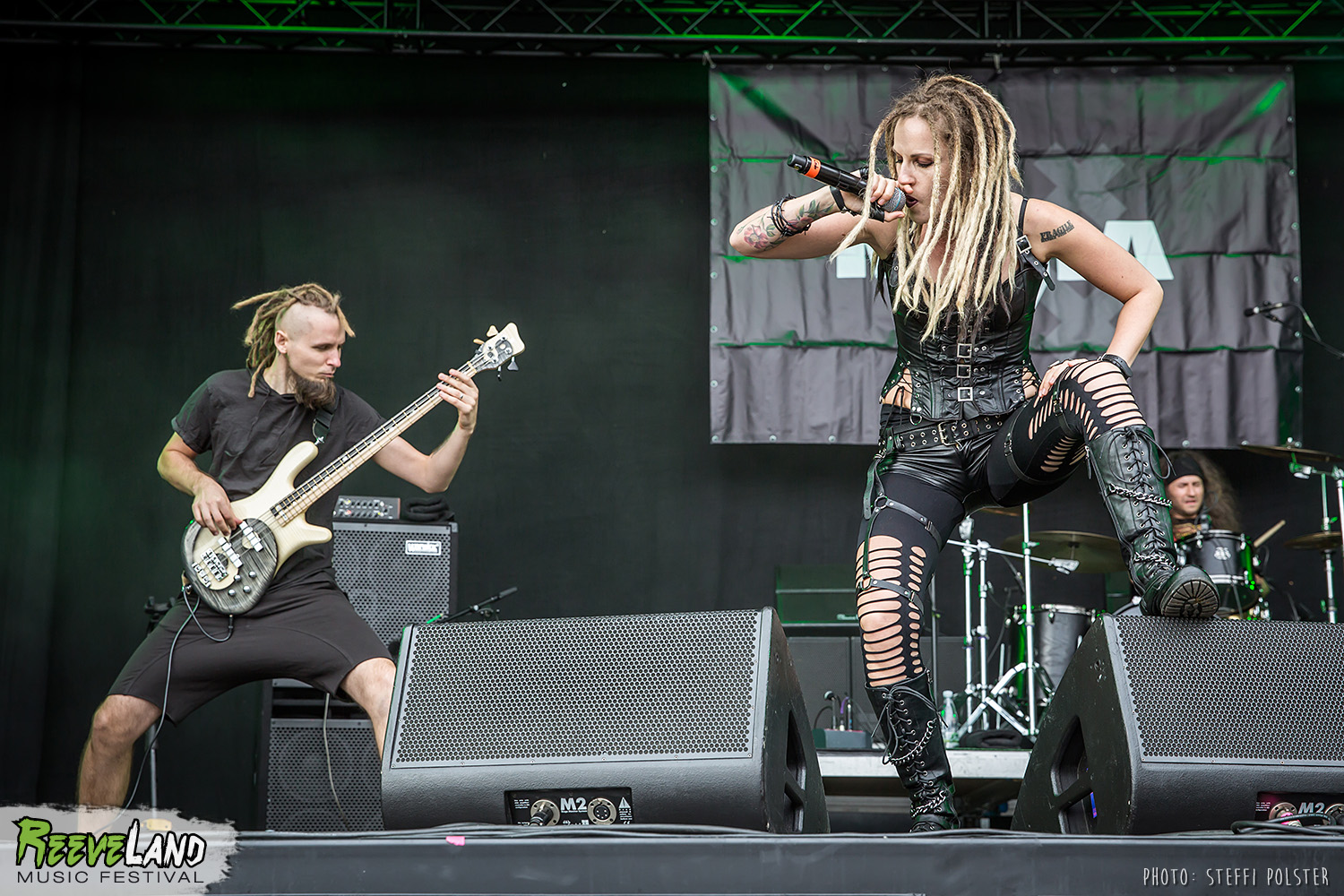
To my disappointment, most opportunities I encountered involved promoting and selling bass products, filming gear reviews, and attending trade shows. I decided to step away from that path. After releasing my solo album, I realized I had reached the end of my journey with the acoustic bass. I felt I had explored all possibilities, and continuing would mean repeating myself. For an artist, repetition is the death of creativity.
I also wanted to do something with Mara, as music always sounds and feel better when you do it with other people. Especially with someone you love. Interestingly, both of us began our musical journeys in metal bands. Metal was what initially brought us together, and after years of playing softer music, it was time to return to our roots.
We found a guitarist and drummer in Latvia and launched a new project “MARA”, a Death Metal band. We could be again on stage together and after 10 years of pause from metal it felt very refreshing and new.
THE POWER OF NOW
MARA has become my primary musical focus right now, yet it hasn’t deterred me from exploring other fields. Over the past 15 years, I’ve consistently taught bass, participated in numerous workshops, and recorded hundreds of tracks as a session bassist. Following the release of my solo album I was waiting for the idea or inspiration to make something new in music. Something which will again spark a flame inside me. I thought maybe after few years I will have some new ideas for acoustic bass, but life had other plans.
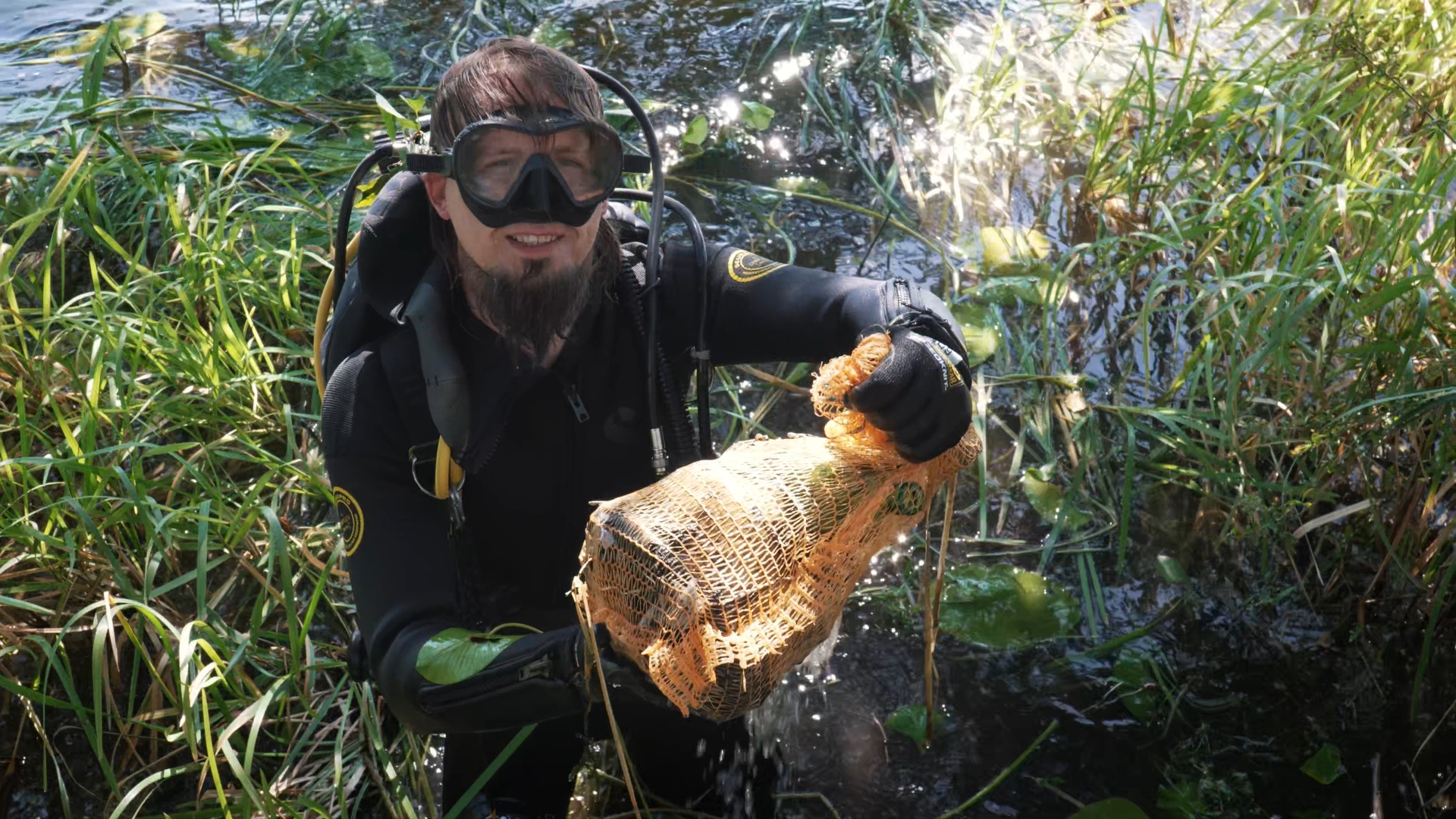
During the Covid-19 lock-down in Spain, I realized it was time to transform my life. I committed most of my time, resources, and energy to protecting wildlife and nature. If you’re interested in this journey, learn more about my project, BE BRAVE TO ACT.
Nature and it’s protection became my new passion, and again like crazy I start to learn video production, editing, ecology, biology 10 hours every day 🙂
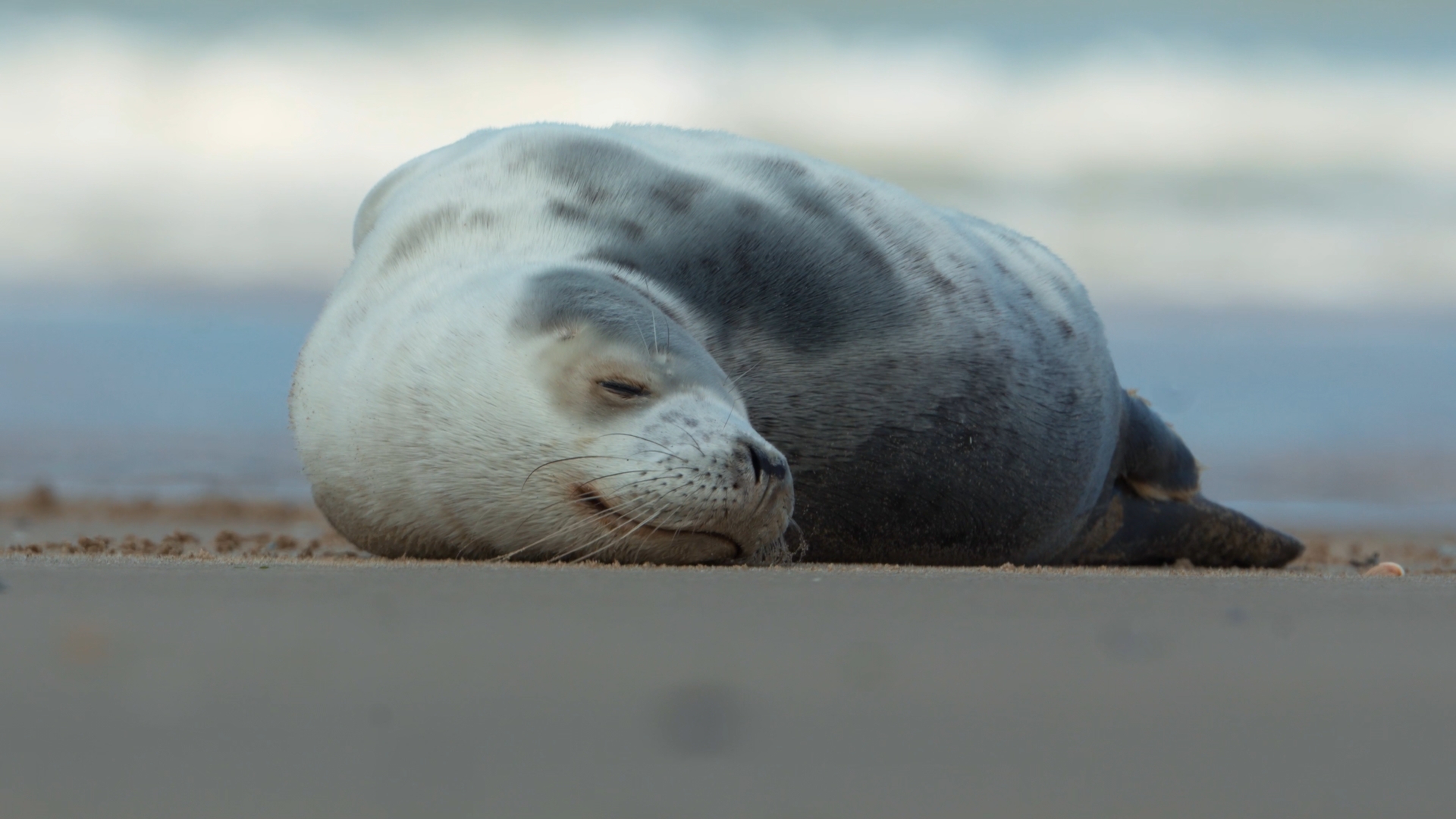
But music is inside me, an I was looking for the way to blend my 2 passions together. Music and Nature conservation, and I did ! I started to make music with the sounds of whales which I recorded during my expeditions. And that’s the direction I am going right now with my creative expression, blending sounds from animals and nature to unite art and wildlife protection
My future plans include creating more “conservation music,” teaching bass, recording bass tracks for various bands, performing in a metal band, traveling, protecting nature, and scuba diving. Life is an adventure, and sometimes unexpected quote to “become a street cleaner“, can inspire you to break boundaries. Remember, only you know what’s best for you, and no one else has control over your life.